Thinktrain has moved! Redirecting…


You should be automatically redirected. If not, visit http://thinktrain.net/ and update your bookmarks.


Showing posts with label technology. Show all posts

Thursday, February 22, 2007

Digital Camera lust


Digital cameras keep getting smaller, better and cheaper. Canon is introducing the Powershot SD-1000 (two designs above), and it is more than double the megapixels (7.1), half the width and a third of the weight of the still great Powershot S230 I bought in 2002. It has a bigger LCD viewscreen on the back, too. At $300, it's also $100 cheaper than the S230 was when I bought it. Wow. [Source: Engadget]

Thursday, January 18, 2007

Get a (Second) Life


If a protest takes place in an Internet-based virtual-reality world, does it resonate in real life? If you're talking about a recent protest by Second Life users regarding the opening of a virtual Front National office, then the answer is yes.

I'm not sure whether to marvel at how quickly Second Life has evolved and at its diverse and rich virtual experience or to stare in disbelief at the entire spectacle. Front National is a far-right political party in France that many of its critics consider fascist, intolerant and racist. As CNET and many others have reported, users who opposed the party's arrival in Second Life's virtual world staged a protest recently that featured machine guns, rainbow explosions and pig-shaped grenades. At least one blogger "attended" the protest and shared his experience:

The first night I arrived at the protest against the Second Life headquarters of Front National, the far right French political party of Jean-Marie Le Pen, it was ringed on all sides by protesters with signs to wave and statements to distribute. By the second night I came (this was late last week), the conflict had become more literal, for many Residents had armed themselves. Multi-colored explosions and constant gunfire shredded the air of Porcupine, a shopping island which FN had inexplicably picked for the site of their virtual world HQ, in December...

It didn't begin like this. After Front National took root, at least two groups, antiFN and SL Left Unity, rose to oppose them. They had placards and T-shirts, and billboards on the land of sympathetic neighbors, all making plain that FN's arrival in Second Life was distinctly unwelcome. For their part, Front National members-- mostly muscular young men dressed in white T-shirts with the FN logo-- stood inside their headquarters, impassively watching the outrage build outside.

But the SL Left Unity group had press releases of their own. "We have acquired land next to the FN office," one announced, "and will be manning a protest there until FN go or are ejected. Wherever fascists are we will ensure they get no peace to corrupt and lie to decent people."
I'm amazed at the level of importance Second Life has earned in the lives of many people. I briefly signed up and explored the virtual world a few weeks ago. While I found it intriguing, I quickly realized that the giant social experiment was demanding a choice: Either immerse myself to my eyeballs in its world, or flee back to reality. In other words, to have a Second Life, I would have to risk sacrificing my first one. How in the world do users who are this consumed with Second Life have time to do anything else? (Maybe others are asking the same of we bloggers right now, and they might have a point.)

On the other hand, maybe there could be some value out of transferring our differences from the real world into cyberspace. How much of an improvement would it be to shift tragic and life-crushing hostilities such as the Israeli-Palestinian conflict into a world such as this? I know there isn't a practical way to eliminate real-world consequences by relocating them to a land generated by bits of code, but I sure wish there were. I wish we could move the unyielding and hateful fundamentalists on both sides who refuse to look for compromise on this and so many other issues onto a Second Life island and allow the people who suffer in their midst in reality to begin rebuilding their communities and their lives.

We can build a fake world to fill our time, but we can't escape the pain and turmoil of the one we were born in. Unless we address the problems we face, they will follow us into cyberspace and anywhere else we go.

Wednesday, January 10, 2007

Is technology making us stupid?

Generally speaking, I think technology does make us more intelligent and allows us to do things we may never previously have thought possible (or necessary, in some cases). Are we becoming too dependent on it, too?

I'm not worried about computers taking over the world, yet, but I wonder if we aren't gradually being dumbed down by technology. We were warned: Our teachers and parents told us to learn math before relying on calculators to crunch numbers for us. Calculators would make it so easy, they said, that we wouldn't pick up the underlying logic and technique.

I wonder whether cell phones are doing the same thing to us. When I was a kid, I knew my home phone number. We had a second line for a while as well, and I still remember both numbers. I remember the number of the family that lived across the street, but I haven't called them in 15 years. Today, I can't tell you the phone numbers of my three best friends or the home phone numbers of my brother or my father. I don't have to remember them: They're all stored in my cell phone.

This reminds me of a scene in the movie Indiana Jones and the Last Crusade. Indy and his dad have a memorable conversation about the things we remember (and the things we forget):

Professor Henry Jones: Stop. You're going the wrong way. We need to get to Berlin.
Indiana Jones: Brody's this way.
Professor Henry Jones: My diary's in Berlin.
Indiana Jones: We don't need the diary, Dad. Marcus has the map.
Professor Henry Jones: There is more in the diary than just the map.
Professor Henry Jones: Well, he who finds the Grail must face the final challenge.
Indiana Jones: What final challenge?
Professor Henry Jones: Three devices of such lethal cunning.
Indiana Jones: Booby traps?
Professor Henry Jones: Oh yes. But I found the clues that will safely take us through, in the Chronicles of St. Anselm.
Indiana Jones: But what are they? Can't you remember?
Professor Henry Jones: I wrote them down in my Diary so I wouldn't have to remember.
I wonder if this is what cell phones are doing to us. I joke sometimes that my cell phone is my brain because it contains my calendar and contacts. Without it, I'm on my way to Berlin, too.

Tomorrow is faster than you think


Even Crave, CNET's blog about technology, isn't fast enough to keep up with the pace of innovation. Here's a post from Monday (emphasis added):

If there were no buttons on your cell phone, imagine how big the screen could be...

Synaptics is doing just that with its Onyx phone (below), a new concept in cell phone technology. Shaped like a remote, it's a bar-style phone that would integrate GPS, music, teleconferencing and calendar events.

But the coolest part is the screen, which takes up nearly the whole handset. Synaptics calls it ClearPad, a thin, high-resolution touch screen based on the company's proprietary sensing technology. With it, there would be no need for buttons to input information. Information can be entered into the Onyx concept phone with two fingers, or via text entry.

Unfortunately, no company is planning on releasing this phone anytime soon, but the Onyx is out there and could be an indicator of what's to come in the design of mobile handsets.
On Tuesday, Steve Jobs confirmed that "not anytime soon" is this coming June. Apple will release the iPhone (above) this summer, and I have to say that it looks revolutionary even for Apple. The iPhone seems remarkably similar in concept to the Onyx, although on first glance it looks better implemented.

The iPhone has been rumored for weeks, but I honestly didn't think it would be this significant a leap forward in technology. I have to confess that I don't care for the iPod's proprietary format that won't allow the use of subscription music services, so I don't know if I'll be an early adopter. I'll probably hold out to see if Palm or anyone else building for the Palm OS can develop a comparable alternative, but I'm sold so far on this new interface.

I think it's wild to see Crave highlight what appeared to be a distant technology on one day, only to see a similar (and possibly better) innovation launch the following day. Things are moving fast around here, and they aren't slowing down anytime soon.


Wednesday, December 06, 2006

Spam 2.0

Yikes. Spam volume has taken a nasty turn upward this year, according to the New York Times, because spammers have adopted a series of new tricks to foil filters. It's amazing that we receive any legitimate messages considering these details below:

Worldwide spam volumes have doubled from last year, according to Ironport, a spam filtering firm, and unsolicited junk mail now accounts for more than 9 of every 10 e-mail messages sent over the Internet...

“Imagine an archvillain who has a new thumbprint every time he puts his thumb down,” said Patrick Peterson, vice president for technology at Ironport. “They have taken away so many of the hooks we can use to look for spam.”

Sunday, October 29, 2006

Save Ferris


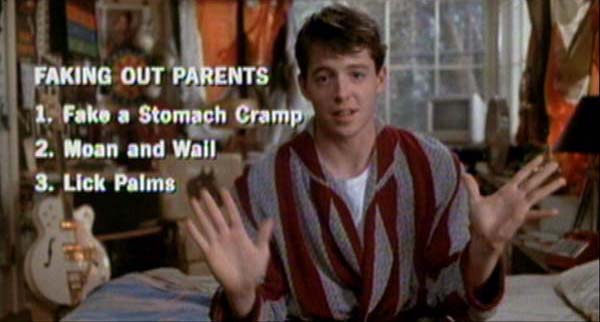
USA Today has seriously underestimated Ferris Bueller, if you ask me, in this story from Friday's edition.

The article does make a good point, though, for most teenagers: Technology has dramatically changed the high-school and young-adult experience during the last five to ten years. Many cities have passed daytime curfews for school-age children, graduated drivers licenses now prevent many teens from leisure driving with buddies, and cellphones with GPS devices mean that parents now can track where their children are throughout the day.

There are a lot of other new challenges for students, too, if they're looking to wreak a little mayhem. For a pro like Ferris, though, I have to think that he'd still find a way to get around them. How about a fake ID and passing his cell phone to a friend who's still at school? He could easily have his calls forwarded to another number, and maybe he would borrow a cell phone from an older friend for the day.

On the whole, I think these restrictions are probably a good thing, although I'm sure I wouldn't have been happy about them as a high schooler. I think it's still important to balance between trust and accountability, and it sounds like that's becoming an increasingly difficult thing to do.

Thursday, October 26, 2006

Google Maps for Treo


I love the recently released Google Maps Mobile application for smartphones. I downloaded it a few days ago and have used it frequently on my Treo 650 (that's a 700p above), and it is genius. I think it's essentially a Web browser that surfs only to Google Maps, but it is really well designed.

It loads quickly and displays only the map interface. Adding locations from the Menu is really easy, and the application very quickly loads the relevant area. This has been so handy for me when heading toward a new destination around town. I highly recommend it.

Ready to check it out? Visit www.google.com/gmm from your phone's Web browser. (You may want to go there on your PC first to make sure your phone is compatible.)

Thursday, October 19, 2006

Speaking of "key"...

... this technology is wild. I'm curious to see it in action. I started typing on a keyboard in grade school way before I ever had a chance to take typing classes, and I've perfected my own distinct version of hunt-and-peck typing that is reasonably effective and quick. (I'm no record setter, but I'm not sluggish, either.) I'm pretty sure that my method of typing is unique to me, so I'm buying that this system would both identify me and protect me from unauthorized logins by other people. I guess this is what's next until we can mass produce retina scan technology.